



Calcium Channel
Ca2+ channels; Ca channels
Calcium channel is an ion channel which displays selective permeability to calcium ions. It is sometimes synonymous as voltage-dependent calcium channel, although there are also ligand-gated calcium channels. Voltage-gated calcium (CaV) channels catalyse rapid, highly selective influx of Ca2+ into cells despite a 70-fold higher extracellular concentration of Na+. Some calcium channel blockers have the added benefit of slowing your heart rate, which can further reduce blood pressure, relieve chest pain (angina) and control an irregular heartbeat.
Calcium Channel Isoform Specific Products
All Product Categories
-
Calcium Channel Inhibitors
(579)
View all products
-
Calcium Channel Agonists
(34)
View all products
-
Calcium Channel Antagonists
(213)
View all products
-
Calcium Channel Activators
(82)
View all products
-
Calcium Channel Modulators
(44)
View all products
-
Calcium Channel Chemical
(1)
View all products
-
Calcium Channel Inducers
(11)
View all products
-
Calcium Channel Controls
(10)
View all products
-
Calcium Channel Ligands
(7)
View all products
-
Calcium Channel Related Products (1217)
Related Products (1217)

-
Antibodies (29)
-
Related Compound Screening Libraries (1)
-
Calcium Channel Isoform Comparison
-
Nebracetam hydrochloride
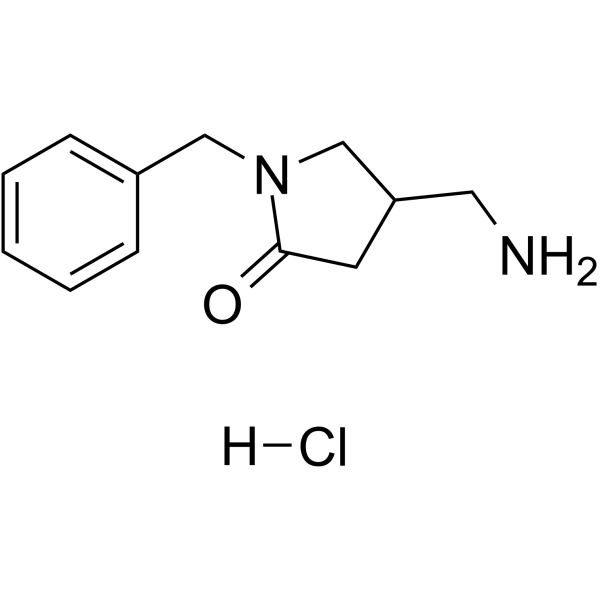 0 ImagesSynonyms: WEB 1881 FU hydrochlorideNebracetam (WEB 1881 FU) hydrochloride is an orally active M1 muscarinic receptor agonist. Nebracetam hydrochloride can induce an increase in intracellular Ca2+ concentration, with an EC50 value of 1.59 mM. Nebracetam hydrochloride exhibits neuroprotective activity and the ability to improve cognitive impairment. Nebracetam hydrochloride can be used in the research of neurological diseases such as Alzheimer's disease.
-
TAT-CBD3A6K
 0 ImagesCat. No.: HY-P10358CAS No.: 1505463-57-9TAT-CBD3A6K, is a modified TAT-CBD3 peptide. TAT-CBD3A6K reduces T- and R-type voltage-dependent calcium currents in dorsal root ganglion (DRG) neurons. TAT-CBD3A6K shows anti-nociceptive effects in a model of AIDS-induced peripheral neuropathy by preventing CRMP-2-mediated enhancement of T- and R-type calcium channel function.
-
DHP-050
 0 ImagesDHP-050 is a Felodipine (HY-B0309) analog. DHP-050 can be used to study the structure-activity relationship of 1,4-dihydropyridine (DHP) compounds.
-
Maurocalcine
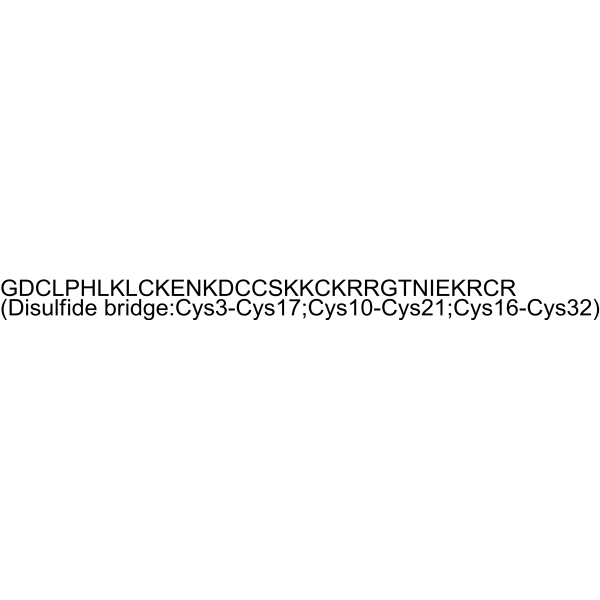 0 ImagesCat. No.: HY-P5114CAS No.: 269745-22-4Maurocalcine is an agonist of ryanodine receptor (RyR) channel types 1, 2 and 3 with cellular permeability. Maurocalcine induces [3H]ryanodine binding on RyR1 with an EC50 value of 2558 nM. Maurocalcine exhibits a apparent affinity of 14 nM for RyR2. Maurocalcine can be applied to in vivo cell tracking or other cell imaging techniques.
-
(R)-Verapamil
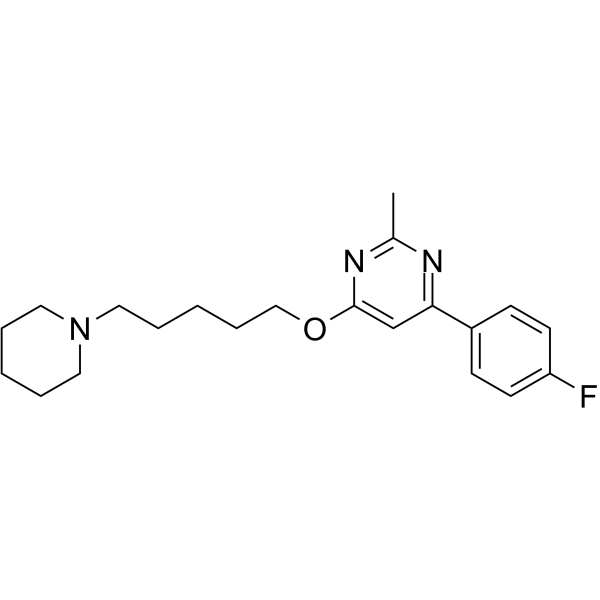
 0 ImagesSynonyms: Dexverapamil(R)-Verapamil (Dexverapamil) is an optically enantiomer of the oral-active Verapamil (HY-14275). (R)-Verapamil has a relatively low affinity for L-type calcium channels (Cav1.2) (IC50 > 300 μM), and its IC50 for sodium channels (sodium channel) is 3.19 μM. (R)-Verapamil exhibits SSTR2 agonistic activity, with an EC50 of 1.3 μM. (R)-Verapamil significantly downregulates the expression of TXNIP protein in diabetic mouse models and significantly inhibits β-cell apoptosis (apoptosis), effectively controlling blood sugar. (R)-Verapamil can be used as a PET tracer for the function of P-glycoprotein (P-gp).
-
(Rac)-MEM 1003
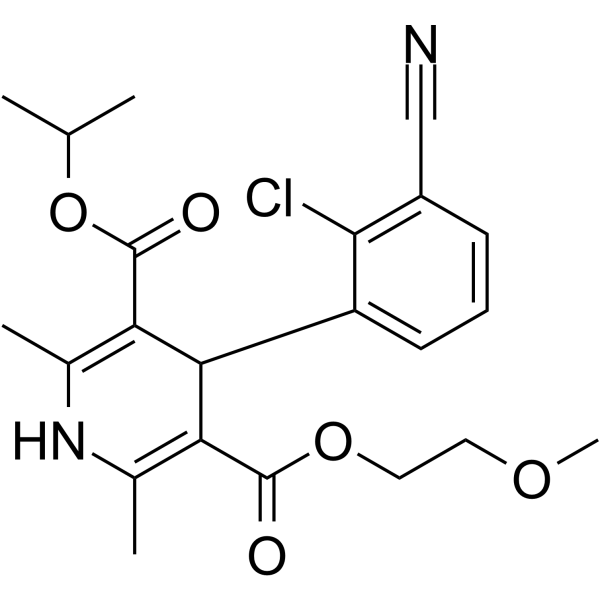 0 Images(Rac)-MEM 1003 is the racemate of MEM 1003. MEM 1003, a dihydropyridine compound, is a potent L-type Ca2+ channel antagonist and has the potential for Alzheimer’s disease research.
-
Norfluoxetine-d5 hydrochloride
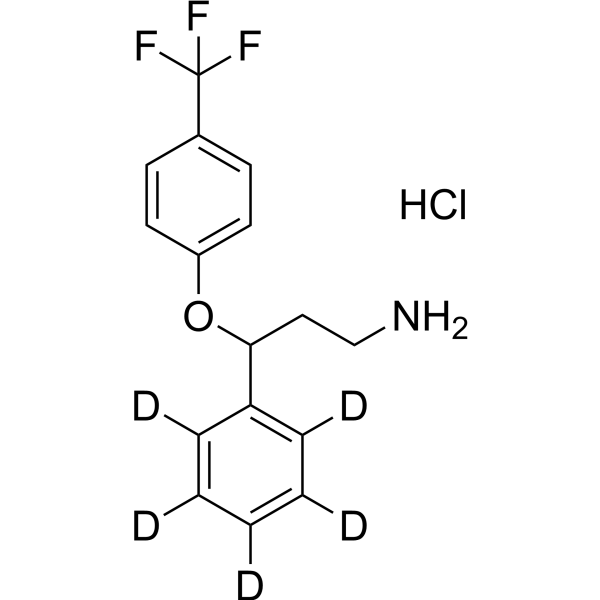 0 ImagesNorfluoxetine-d5 hydrochloride is the d5-labeled Norfluoxetine hydrochloride (HY-W011235). Norfluoxetine hydrochloride is the active metabolite of the antidepressant Fluoxetine (HY-B0102); it is also a TREK-2 K2P potassium channel inhibitor. Norfluoxetine hydrochloride exhibits neuroimmunological activity, induces apoptosis in primary microglial cells, and inhibits the release of pro-inflammatory factors. Norfluoxetine hydrochloride inhibits high-threshold voltage-gated Ca2+ currents in neurons with an EC50 of 20.4 μM. Norfluoxetine hydrochloride can be used in research related to depression, ischemic stroke, and epilepsy.
-
Tilmicosin (Standard)
 0 ImagesSynonyms: LY-177370 (Standard); EL-870 (Standard)Tilmicosin (Standard) is the analytical standard of Tilmicosin. This product is intended for research and analytical applications. Tilmicosin (LY-177370) is an orally active calcium channel antagonist and macrolide antibiotic with antimicrobial activity. Tilmicosin mainly acts on the 50S subunit of bacterial ribosomes, inhibiting protein synthesis. Tilmicosin is effective in the treatment of respiratory diseases in livestock such as cattle, sheep and pigs. In addition, Tilmicosin has immunomodulatory and anti-inflammatory effects.
-
Halofuginone hydrobromide (Standard)
 0 ImagesSynonyms: RU-19110 hydrobromide (Standard)Halofuginone (hydrobromide) (Standard) is the analytical standard of Halofuginone (hydrobromide). This product is intended for research and analytical applications. Halofuginone (RU-19110) hydrobromid, a Febrifugine derivative, is a competitive prolyl-tRNA synthetase inhibitor with a Ki of 18.3 nM. Halofuginone hydrobromid is a specific inhibitor of type-I collagen synthesis and attenuates osteoarthritis (OA) by inhibition of TGF-β activity. Halofuginone hydrobromid is also a potent pulmonary vasodilator by activating Kv channels and blocking voltage-gated, receptor-operated and store-operated Ca2+ channels. Halofuginone hydrobromid has anti-malaria, anti-inflammatory, anti-cancer, anti-fibrosis effects.
-
Devapamil
 0 ImagesSynonyms: D 888; DesmethoxyverapamilDevapamil (D 888; Desmethoxyverapamil) is an antagonist for calcium channel.
-
Cinepazide
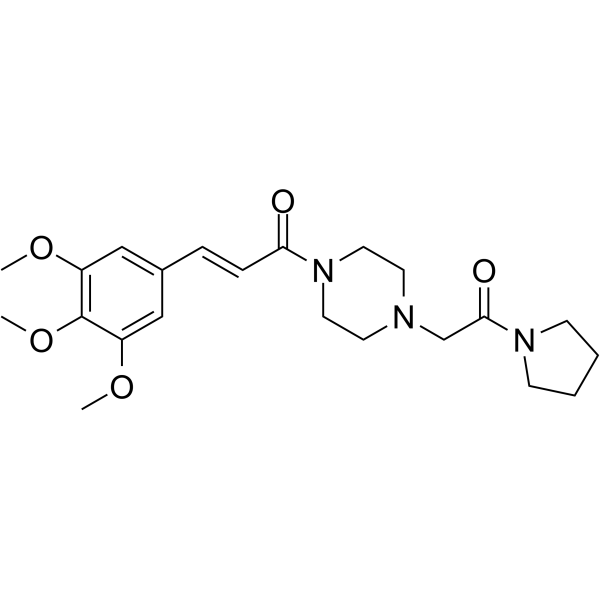 0 ImagesCat. No.: HY-66010ACAS No.: 23887-46-9Cinepazide is a piperazine derivative and acts as a weak calcium channel blocker. Cinepazide is a potent vasodilator and can be used for the research of cerebrovascular diseases, including ischemic stroke, brain infarct et. al.
-
Minocycline-d6 sulfate
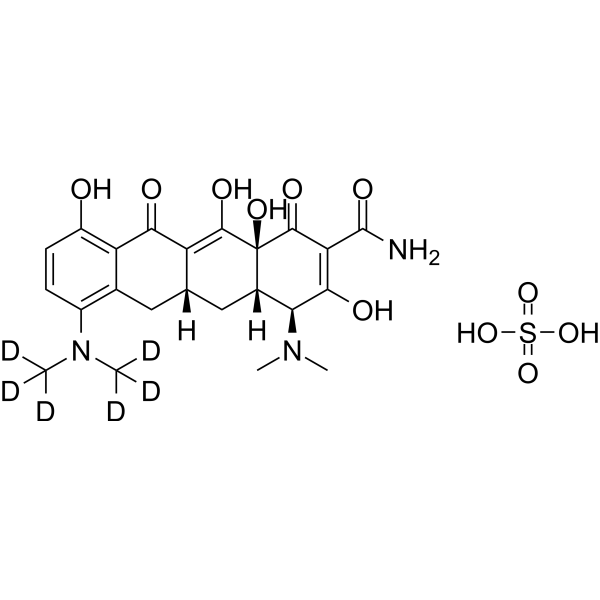 0 ImagesCat. No.: HY-17412S1Minocycline-d6 sulfate is deuterated labeled Minocycline (HY-17412A). Minocycline is an orally active, potent and BBB-penetrated semi-synthetic tetracycline antibiotic. Minocycline is a hypoxia-inducible factor (HIF)-1α inhibitor. Minocycline shows anti-cancer, anti-inflammatory, and glutamate antagonist effects. Minocycline reduces glutamate neurotransmission and shows neuroprotective properties and antidepressant effects. Minocycline inhibits bacterial protein synthesis through binding with the 30S subunit of the bacterial ribosome, resulting in a bacteriostatic effect.
-
Fasudil Hydrochloride (Standard)
 0 ImagesSynonyms: HA-1077 Hydrochloride (Standard); AT-877 Hydrochloride (Standard)Fasudil (Hydrochloride) (Standard) is the analytical standard of Fasudil (Hydrochloride). This product is intended for research and analytical applications. Fasudil (HA-1077; AT877) Hydrochloride is a nonspecific RhoA/ROCK inhibitor and also has inhibitory effect on protein kinases, with an Ki of 0.33 μM for ROCK1, IC50s of 0.158 μM and 4.58 μM, 12.30 μM, 1.650 μM for ROCK2 and PKA, PKC, PKG, respectively. Fasudil Hydrochloride is also a potent Ca2+ channel antagonist and vasodilator.
-
Felodipine (Standard)
 0 ImagesFelodipine (Standard) is the analytical standard of Felodipine. This product is intended for research and analytical applications. Felodipine, a dihydropyridine, is a potent, vasoselective calcium channel antagonist. Felodipine lowers blood pressure (BP) by selective action on vascular smooth muscle, especially in the resistance vessels. Felodipine, an anti-hypertensive agent, induces autophagy. Felodipine can cross the blood-brain barrier.

-
Flavoxate hydrochloride (Standard)
 0 ImagesSynonyms: Rec-7-0040 (Standard); DW61 (Standard)Flavoxate (hydrochloride) (Standard) is the analytical standard of Flavoxate (hydrochloride). This product is intended for research and analytical applications. Flavoxate hydrochloride (Rec-7-0040; DW61) is an orally active L-type Ca2+ channel inhibitor and antispasmodic. Flavoxate hydrochloride inhibits cyclic adenosine monophosphate production by blocking voltage-dependent inward Ba2+ currents, regulating the brainstem micturition center, and stimulating G protein-coupled receptors. Consequently, Flavoxate hydrochloride induces relaxation of bladder smooth muscle and inhibits isovolumetric rhythmic contractions. Flavoxate hydrochloride effectively increases bladder capacity and alleviates symptoms of urgent urination frequency and pollakiuria caused by overactive bladder. Flavoxate hydrochloride can be used in research on overactive bladder and related voiding dysfunctions.
-
Flunarizine dihydrochloride (Standard)
 0 ImagesFlunarizine (dihydrochloride) (Standard) is the analytical standard of Flunarizine (dihydrochloride). This product is intended for research and analytical applications. Flunarizine dihydrochloride is a potent dual Na+/Ca2+ channel (T-type) blocker. Flunarizine dihydrochloride is a D2 dopamine receptor antagonist. Flunarizine dihydrochloride shows anticonvulsive and antimigraine activity, and peripheral vasodilator effects.
-
BMS-195270
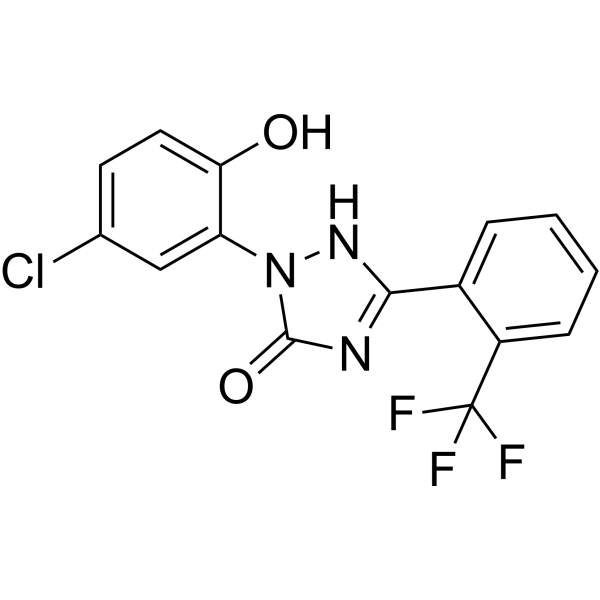 0 ImagesCat. No.: HY-120620CAS No.: 202822-23-9BMS-195270 is a small molecule that inhibits Carbachol (HY-B1208)-evoked tonicity of isolated rat bladder strips. BMS-195270 inhibits calcium flux.
-
Ethosuximide-d3
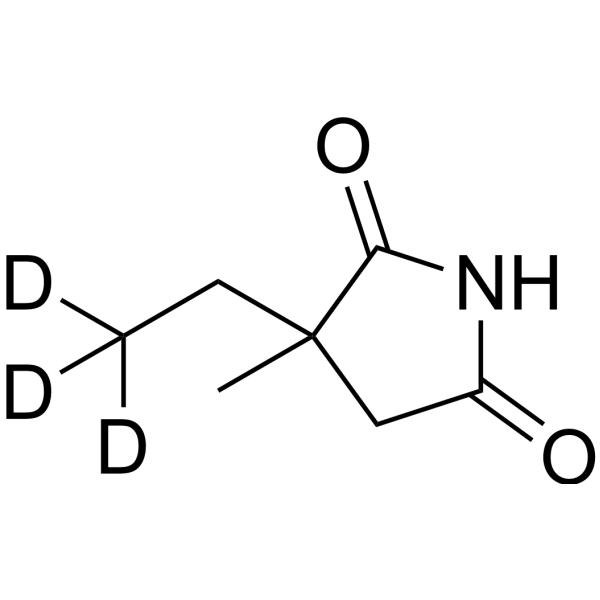 0 ImagesCat. No.: HY-B1378SCAS No.: 1189703-33-0Ethosuximide-d3 is the deuterium labeled Ethosuximide. Ethosuximide, a widely prescribed anti-epileptic agent, improves the phenotypes of multiple neurodegenerative disease models and blocks the low voltage activated T-type calcium channel.




